Buying Leads Without Follow-Up Is Like Filling a Bucket With Holes
Home improvement companies are spending more on lead generation than ever before.
But for many organizations, the biggest revenue problem isn’t generating demand. It’s what happens after the lead comes in.
As lead costs continue to rise, every missed call, delayed response, or inconsistent follow-up process becomes more expensive. Yet many companies still focus most of their attention on acquisition while conversion operations remain fragmented across teams and systems.
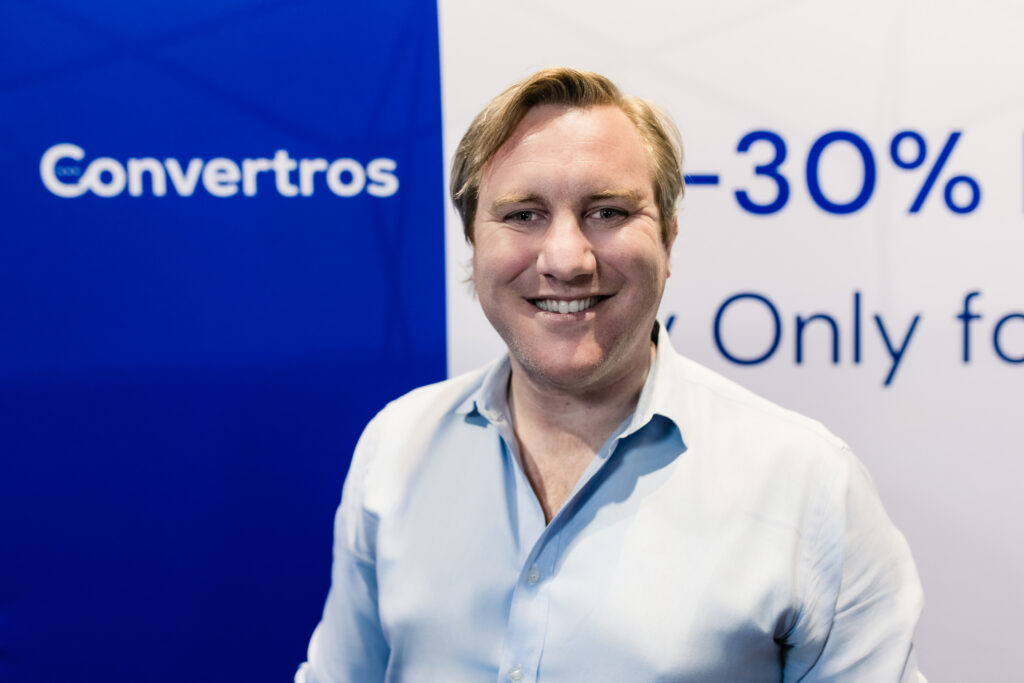
As Stirling Cox, CEO & Co-Founder of Convertros, explains: “Most companies don’t realize how much revenue they’re leaking until they look beyond lead volume and start analyzing conversion performance.”
That leakage often happens quietly.
A lead submits a form after hours and doesn’t receive a response until the next morning. A homeowner misses a call and never gets a second follow-up. An appointment opportunity sits too long in a queue before being assigned.
Individually, these moments seem small. At scale, they create significant operational waste.
And the challenge becomes even bigger for companies handling high lead volume across multiple markets, teams, and campaigns.
Mike Podrazhansky, CEO & Co-Founder at Convertros, sees this as a systems problem rather than a marketing problem:
The companies scaling most successfully are building infrastructure around conversion, not just infrastructure around lead generation.”
That distinction is becoming increasingly important across home improvement.
Many organizations still treat conversion as a disconnected sequence of tasks: lead generation, call handling, appointment booking, follow-up. But high-performing companies are approaching it differently. They are building coordinated systems where speed-to-lead, communication, data flow, and customer experience work together as part of a unified revenue process.
Because conversion does not happen in a single interaction.
It happens across the entire customer journey.
Carolina Huczek, Marketing Manager at Convertros, describes the shift this way:
The conversation is moving away from simply generating more leads and toward maximizing the value of every opportunity already coming into the funnel.”
That mindset is changing how more mature organizations operate.
Instead of only increasing acquisition spend, they are investing in responsiveness, operational consistency, and better coordination between marketing, sales, and lead handling teams.
The result is not just more efficiency.
It is more predictable revenue.
Conclusion
Generating more leads without improving follow-up creates operational leakage that compounds over time.
The companies creating the strongest long-term growth are not simply the ones buying more leads. They are the ones building systems that respond faster, follow up consistently, and convert demand into revenue more efficiently.
Because in today’s market, conversion is no longer just a sales function.
It is a competitive advantage.