How to Evaluate Managed Lead Conversion Services in 2026
Home improvement companies are generating more leads, adopting more technology, and investing more heavily in marketing than ever before.
But many are still struggling with the same problem:
converting inbound demand consistently.
That shift is forcing more organizations to reevaluate how they manage lead conversion and what they should actually expect from a managed conversion partner in 2026.
Because not all providers solve the same problem.
Some focus on answering calls.
Others focus on scheduling appointments.
Some emphasize automation and AI.
Very few are truly built around booked appointments, customer experience, and revenue outcomes. And that distinction matters more than ever.
The Best Conversion Systems Focus on Outcomes, Not Activity
One of the biggest mistakes companies make when evaluating vendors is focusing too heavily on activity metrics.
High call volume does not automatically mean strong conversion performance.
The real question is not:
“How many calls can you answer?”
It is:
“How effectively can you convert inbound demand into booked and attended appointments?”
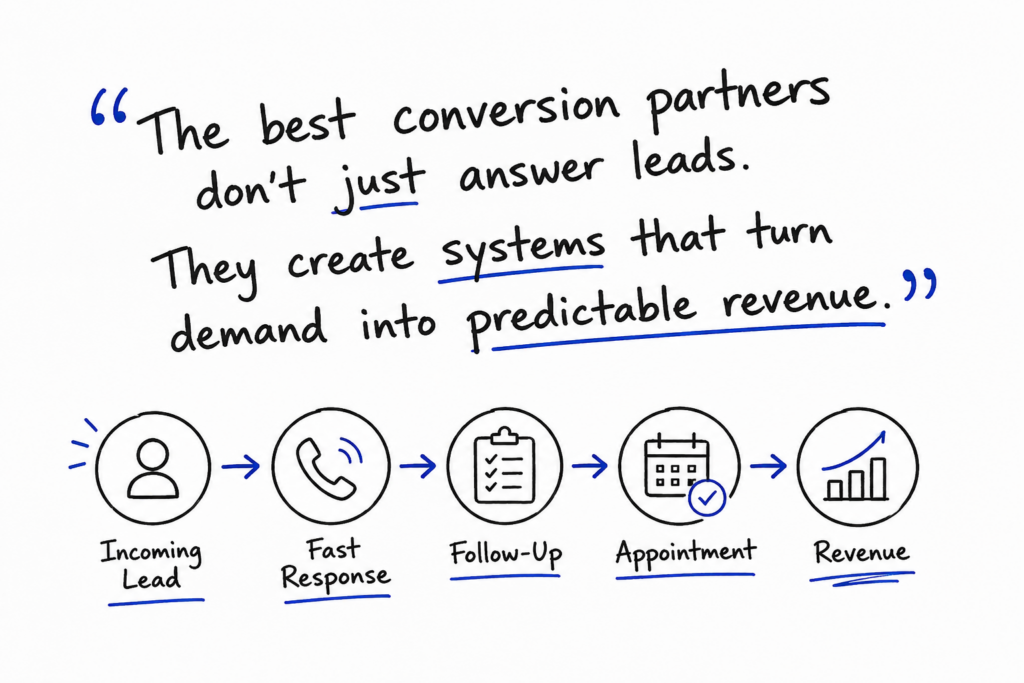
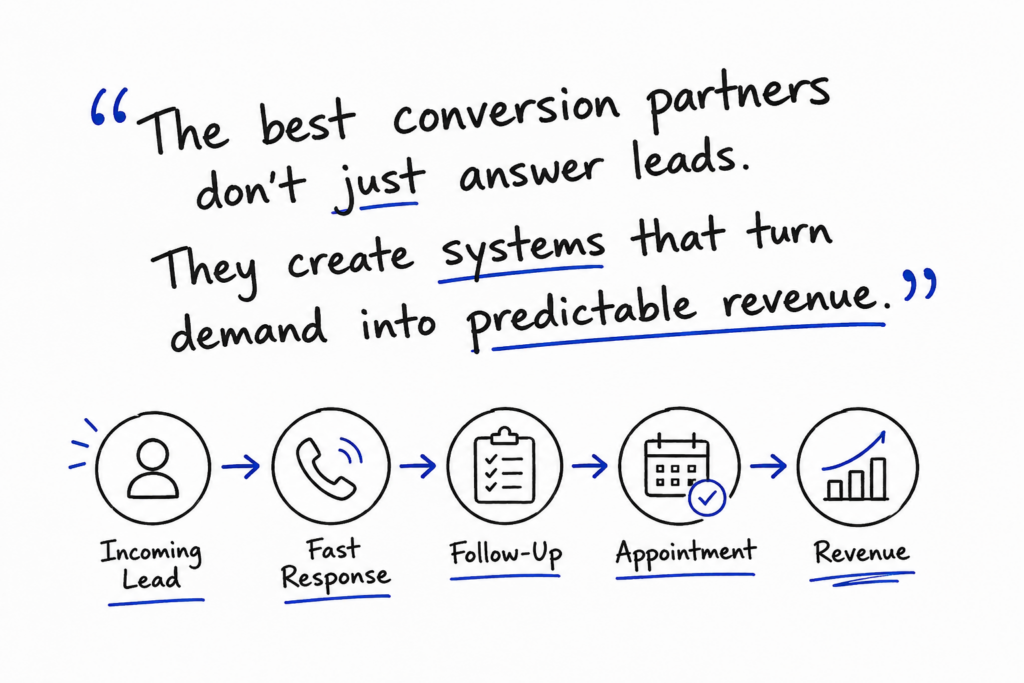
As Stirling Cox, CEO & Co-Founder of Convertros, explains:
The best conversion systems are designed around outcomes, not activity. Answering the lead is only the beginning.”
That perspective changes how organizations should evaluate potential partners.
Because conversion is no longer just an operational support function.
It is directly tied to revenue performance.
Speed-to-Lead Is Now Part of Customer Experience
Consumer expectations have changed significantly over the last few years.
Homeowners expect fast, seamless engagement after submitting a form or requesting information. Delayed responses often result in lost opportunities before conversations even begin.
But responsiveness today is not only about speed.
It is also about consistency.
How are after-hours inquiries handled?
What happens during overflow periods?
How quickly are missed calls followed up?
What experience does the homeowner receive throughout the process?
These moments shape both conversion performance and brand perception.
And for high-volume organizations, even small delays can create significant operational leakage over time.
Scripts Alone Don’t Create Great Conversion Systems
Technology matters.
But execution matters more.
The people handling homeowner conversations directly impact:
- appointment quality
- booking consistency
- customer trust
- overall customer experience
That is why companies should look closely at how conversion specialists are trained and supported.
Rigid scripts are rarely enough in complex homeowner conversations. High-performing systems rely on specialists who can adapt, communicate naturally, and guide conversations effectively while still maintaining process consistency.
As Noel Land, Sales & Partnerships Manager at Convertros, explains:
The difference between average and high-performing conversion systems is often consistency. Follow-up is where many opportunities are either recovered or lost.”
That consistency becomes especially important across follow-up workflows.
Because most appointments are not booked during the first interaction.
The Real Difference Is Operational Visibility
One of the biggest differentiators between providers is visibility into performance.
Basic activity dashboards are no longer enough.
Leadership teams need to understand:
- where opportunities are being lost
- how quickly leads are being engaged
- where bottlenecks exist
- how follow-up impacts sit rates
- how operational changes affect revenue outcomes
The strongest conversion systems provide visibility across the entire customer journey, not just isolated interactions.
Because conversion performance is ultimately an operational issue not just a marketing metric.
Questions Every Company Should Ask Vendors
Before selecting a managed lead conversion partner, companies should ask:
How is success measured?
Are metrics tied to answered calls or booked and sat appointments?
What happens after hours?
How are weekends, evenings, and overflow periods handled?
How does follow-up work?
What happens after the first missed contact attempt?
How are specialists trained?
How is quality assurance managed across conversations and workflows?
What visibility will leadership teams receive?
Can operational bottlenecks and conversion leakage be identified clearly?
Can the system scale during volume spikes?
How is consistency maintained under operational pressure?
How is customer experience protected?
Every interaction reflects directly on the company’s brand.
The Takeaway