Why Conversion Infrastructure Matters More Than Ever in 2026

For years, growth in home improvement was largely driven by lead generation.
More leads meant more opportunities, more appointments, and more revenue.
But in 2026, that equation is changing.
Lead costs continue to rise. Consumers expect faster responses. Operational complexity is increasing across every stage of the funnel. And companies are realizing that generating demand is only part of the challenge.
What happens after the lead comes in is becoming just as important as the lead itself.
That shift is forcing many organizations to rethink how they approach conversion.
The Industry is Moving Beyond Lead Volume
Historically, performance conversations centered around acquisition.
How many leads did marketing generate?
How much did each lead cost?
How quickly could volume scale?
Those metrics still matter, but they no longer tell the full story.
Today, companies are beginning to recognize that inefficiencies inside the conversion process create major operational and financial leakage.
Missed calls.
Delayed responses.
Inconsistent follow-up.
Poor coordination between teams.
At scale, those gaps become expensive.
As Stirling Cox, CEO & Co-Founder of Convertros, explains:
The companies creating the strongest growth today are not just generating demand. They’re building systems that convert demand more efficiently.”
That distinction is becoming one of the biggest competitive advantages in home improvement.
Why Operational Complexity is Increasing
The modern conversion process is no longer linear.
Companies are now managing inbound calls, web forms, SMS communication, CRM workflows, appointment scheduling, AI-driven automation, after-hours inquiries, etc. And all of these systems need to work together consistently.
The challenge is not simply adding more technology.
It is creating operational alignment between people, processes, and systems.
Because disconnected operations create disconnected customer experiences.
And homeowners notice quickly.
Speed-to-Lead is No Longer Optional
One of the clearest shifts in recent years has been consumer expectations around responsiveness.
Homeowners now expect immediate engagement after submitting a form or requesting information.
The longer the delay, the greater the likelihood that the opportunity disappears.
But speed alone does not solve the problem.
Fast responses without proper qualification, communication, or follow-up still create conversion leakage.
This is why many organizations are moving away from thinking about conversion as a call center function and toward viewing it as a revenue operations system.
The goal is not simply answering inbound activity.
The goal is creating booked and attended appointments that turn into revenue.
AI Is Accelerating the Industry and Raising the Standard
AI and automation are rapidly changing how home improvement companies operate.
From lead routing and call handling to reporting and workflow automation, technology is creating new opportunities to improve efficiency and visibility.
But more tools do not automatically create better performance.
In many cases, they increase operational complexity.
As Noel Land, Sales & Partnerships Manager at Convertros, explains:
“The companies scaling most successfully are not just adopting more tools. They’re building better systems around the customer journey.”
That difference matters.
Because technology without operational coordination often creates fragmentation instead of efficiency.
The Best Companies Think About Conversion Differently
The most operationally mature organizations are no longer treating conversion as a disconnected sequence of tasks.
They are building integrated systems where speed-to-lead, call handling, follow-up, appointment booking, customer experience and reporting all work together as part of a larger revenue engine.
This creates:
- more consistency
- better lead utilization
- stronger appointment performance
- improved customer experience
- more predictable revenue outcomes
And as lead costs continue to rise, that efficiency becomes increasingly valuable.
Conversion is Becoming Infrastructure
One of the biggest changes happening across the industry is the way companies think about conversion itself.
It is no longer viewed as simple call answering or isolated appointment booking. It is becoming an infrastructure.
The companies pulling ahead are investing in systems designed to:
- reduce operational leakage
- improve responsiveness
- maintain consistency at scale
- support the entire customer journey
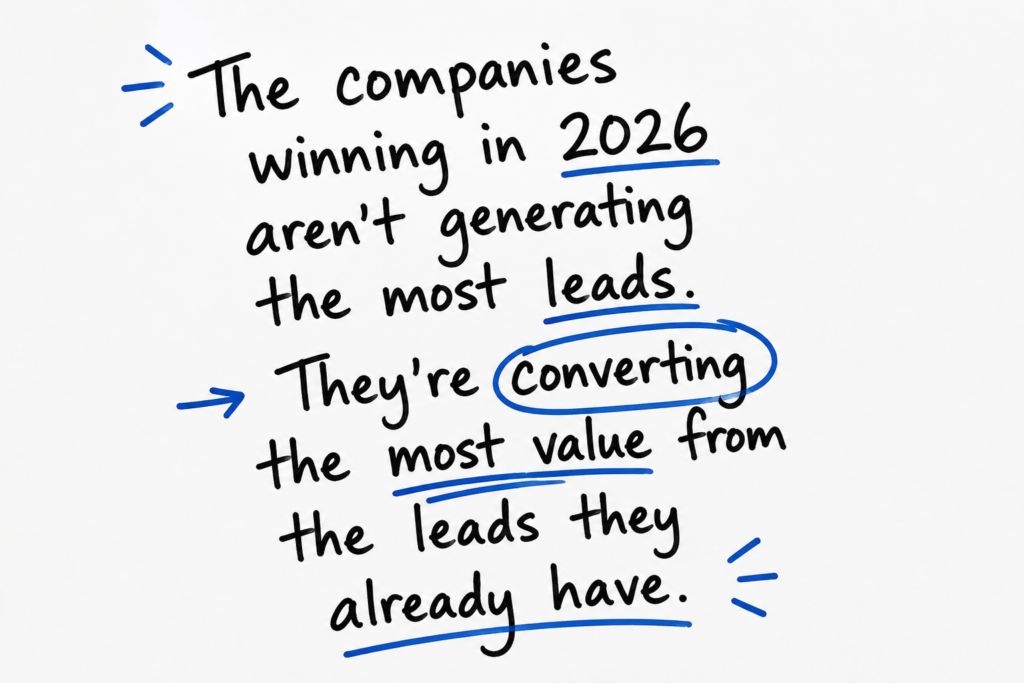
Because growth today depends less on generating more opportunities and more on maximizing the value of the opportunities already coming into the funnel.
Conclusion
The home improvement industry is entering a more operationally complex era.
Lead generation still matters, but conversion infrastructure is becoming one of the biggest drivers of long-term performance.
The companies creating the strongest growth in 2026 are not simply buying more leads or adding more technology.
They are building coordinated systems that improve responsiveness, reduce friction, and convert demand into revenue more efficiently.
Because in today’s market, conversion is no longer just a sales function.
It is a competitive advantage.