Paid Demand Is the Starting Line, Not the Finish Line

What Home Improvement Executives Should Measure After the Lead Arrives
Series: The Conversion Infrastructure Series | Part 2 of 4 ise Home Improvement Operators Learn When They Expand
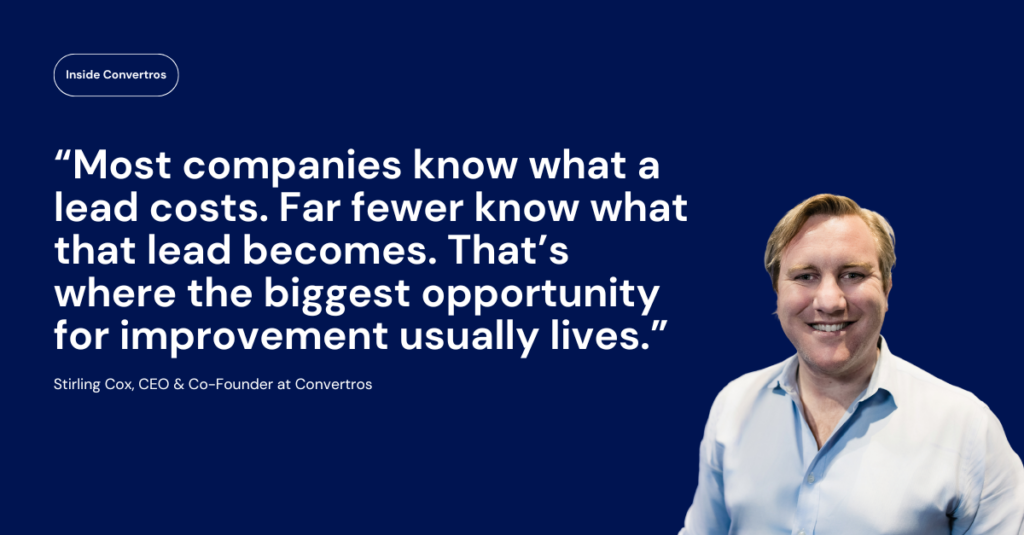
Marketing teams have become incredibly good at measuring the top of the funnel.
Every week, leadership reviews dashboards filled with cost per lead, campaign performance, channel attribution, and lead volume. Those metrics matter, they help determine where demand is coming from and how efficiently it’s being generated.
But there’s a much bigger question that often goes unanswered:
What happened after the lead arrived?
Was the homeowner contacted?
Did anyone answer?
Was the opportunity qualified?
Did an appointment get booked?
Did that appointment actually happen?
And ultimately, did any of it generate revenue?
Many companies can measure demand with incredible precision, yet have limited visibility into the operational journey that follows. That’swhere the next competitive advantage is emerging.
Why the Old Dashboard Stops Too Early
Traditional marketing dashboards were designed to answer one question:
Did we generate enough demand?
Today’s executive teams need to answer a different one:
Did that demand actually become revenue?
There’s a significant operational journey between a lead submission and a closed job. Every interaction along the way either builds momentum or creates friction.
That’s why the companies scaling most successfully are expanding their dashboards beyond marketing metrics.
They’re measuring the entire customer journey.
Introducing the Lead-to-Customer Scorecard
Rather than thinking about conversion as one metric, think about it as a connected operating system.
Every lead should move through a consistent series of measurable checkpoints.
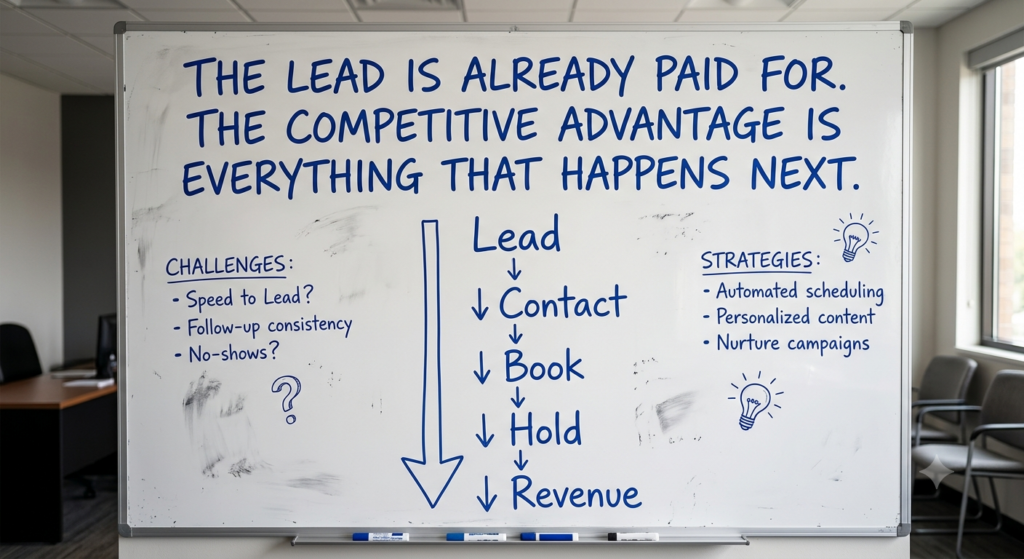
Notice what’s missing.
There isn’t a finish line called Qualified Lead.
Because a qualified lead doesn’t create revenue.
A qualified appointment does.
Qualified Leads Are a Milestone. Not the Outcome
This is one of the biggest mindset shifts happening across enterprise home improvement organizations.
For years, teams celebrated qualified leads as the primary success metric.
But qualification is only one checkpoint in a much longer process.
A lead can be qualified and never answer another call.
A qualified homeowner can cancel the appointment.
A booked appointment can become a no-show.
Revenue isn’t created because a lead looked promising.
Revenue is created when the entire conversion process works consistently.
As Stirling explains:
“Marketing and sales shouldn’t be looking at different scorecards. The strongest operators measure the entire customer journey.”
When every department measures different outcomes, alignment becomes difficult.
When everyone works from the same scorecard, improvement becomes much easier.
Why This Changes the Way Businesses Operate
One scorecard creates better conversations across the entire organization.
Marketing begins to understand which campaigns produce appointments, not just leads.
Sales gains visibility into the quality of conversations entering the calendar.
Operations identifies where response times or follow-up consistency begin to slip.
Leadership can finally compare markets, brands, and lead sources using the same operating language.
Even external partners benefit.
Lead providers, agencies, and technology partners become more valuable when they receive downstream feedback instead of simply delivering volume.
The conversation shifts from: “How many leads did we buy?” to “Which sources consistently create appointments that become revenue?”
That’s a much more strategic discussion.
The Scorecard Creates Accountability
One of the most overlooked benefits of a Lead-to-Customer Scorecard is accountability.
Instead of pointing fingers between departments, every team becomes responsible for a shared outcome.
Marketing owns demand quality.
Operations owns response speed.
Conversion teams own conversations and follow-up.
Sales owns the in-home experience.
Leadership owns visibility across the entire system.
When every stage is measured consistently, improvement becomes measurable.
And measurable systems improve faster.
The Executive Takeaway
The companies creating the strongest growth today aren’t simply investing more in marketing.
They’re investing more in visibility.
They understand that revenue isn’t created by lead generation alone.
It’s created by consistently moving every opportunity from first contact to held appointment and learning from every step along the way.
The Lead-to-Customer Scorecard isn’t another dashboard.
It’s a different way of operating.
Because you can’t improve what happens after the lead arrives if you never measure it.
Continue the Series
✓ Part 1: Growth Doesn’t Create Consistency. Systems Do.
Soon → Part 3
Where Multi-Market Growth Breaks First: The Lead-to-Appointment Handoff
Where does conversion actually begin to break and why do similar leads produce different outcomes?